
A Brief Study on Frankincense (Olibanum) and Myrrh
Ancient perfumes — especially those based on resinous materials — relied on a fascinating alchemy. Unlike modern essential oils extracted through steam distillation, the ancients often used infusion processes in fats (enfleurage) or, more commonly, hot maceration in oil or a primitive alcoholate. Filtration then released the “soul” of the resins. Resins were crucial because they acted as natural fixatives, prolonging the volatility of lighter notes.

Frankincense, the Essence of Heaven
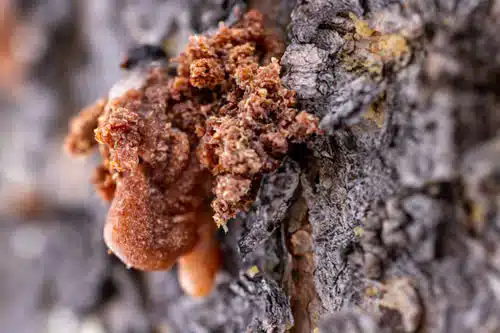
Frankincense, derived from Boswellia sacra, is the essence of the sky. Its master molecule, boswellic acid, carries within it an anti‑inflammatory power that defies time. Once volatilized, it releases monoterpenes and sesquiterpenes — pinene, caryophyllene — creating that celestial fragrance that elevates the spirit. It is pure light.
Myrrh, Daughter of the Earth
Myrrh, daughter of Commiphora, is its earthly shadow. More bitter, more rooted, it carries the iodic and balsamic note of the soil. If Frankincense rises, Myrrh anchors. Its glycosides and triterpenic acids, though less abundant, offer bacterial protection — an invisible armor against corruption. Together, they form a perfect synergy: one lifts toward the gods, the other preserves the flesh.
Sacred Neurology
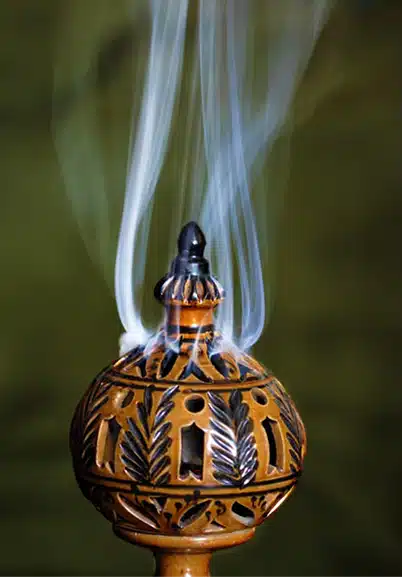
When incense rises, it does not only cross the air — it crosses the soul. Inhaling these volatiles acts like a key on the doors of the limbic system, that sanctuary of emotion and memory.
The scent of Frankincense invites the Alpha state, that wave of 8 to 12 Hz where alert relaxation allows the mind to focus effortlessly. It is the state of prayer, of deep meditation. Further still, toward Theta waves (4–7 Hz), incense seems to open the doors of the hippocampus and the cingulate gyrus, encouraging altered states of consciousness, lucid dreams, and spiritual connection. By modulating GABA and serotonin, incense soothes anxiety in a natural and gentle way.
Protection of the Body — From Lungs to Bones
The action of incense does not stop at the mind: it bathes the body.
Through the lungs, the fine smoke carries bronchial anti‑inflammatory virtues, softening ancient asthma and bronchitis. Internally, boswellic acids support the liver and kidneys, while Myrrh and Frankincense calm the digestive tract, dispelling gas and easing colitis.
But perhaps their most subtle effect lies in the skeleton. By inhibiting 5‑LOX, the AKBA in Frankincense combats chronic inflammation — the kind that erodes the joints. By relieving pain, it allows the body to move again. Incense does not build bone, but it frees the human being from the immobility of suffering, thus preserving bone density through movement. It is the guardian of mobility.
Embalming — The Science of Immortality
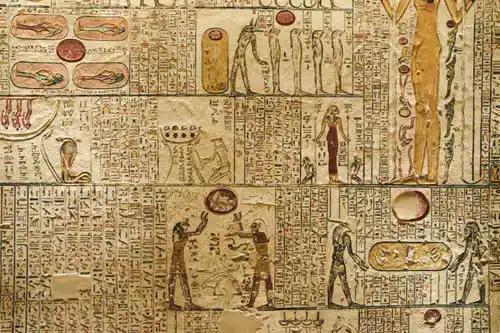
It is in the supreme rite of embalming that Frankincense and Myrrh reach their peak. For the Egyptians, death was not an end but a transformation. Mummification was advanced chemistry, an engineering of eternity.
Resins were not only perfumes and spiritual vectors — they were also biocides. Against the work of anaerobic bacteria and fungi, the phenolic and terpenic compounds of incense erected a toxic barrier against putrefaction. The strong scent of incense signified purity, the “sweat of the gods” covering mortal flesh.
Natron dried, but the resins sealed.
The embalmers, the Netjeri, prepared complex balms that acted as powerful solvents penetrating the tissues. They melted Frankincense and Myrrh in cedar oil. This mixture, enriched with cinnamon and cassia, was injected into the skull to fill voids and disinfect the remaining brain matter. For nobles, the embalmers filled the abdominal cavities with a substance that hardened as it cooled, keeping the organs in place and proetcting them from air and moisture (the organs were entirely removed for the pharaoh).
Finally, the entire body was anointed with this resin, creating a hydrophobic crust, impermeable to worms and insects. Frankincense, more precious than gold, was the divine guarantee. It allowed the deceased to travel into the Afterlife with active, alchemical, and spiritual protection.
Today, analyses of the mummies of Ramses III or Inyotef I confirm that the resins remain intact, while the vegetable oils have turned rancid. Incense endured — it conquered time.