The Nose, Key to Knowledge: Between Neuroscience and the Sacred

The Nose, Symbol of Knowledge
In many traditions around the world, the nose and the sense of smell occupy a central place. Smell is often considered the sense that connects us directly to our soul, acting as a bridge between the material world and the spiritual world.
If we observe the social structure of the elephant and the anatomy of the camel in Hindu oral traditions (stories carried and transmitted along the Silk Road), we notice a particular connection between these symbols. The elephant, with its matriarchal system and prodigious memory, maintains a deep relationship with the “Mother” (Water, Home, Education, Childhood). In this ontological vision, flowers and perfumes act upon memory and serve as a direct link for communion with the divine spirit. They are connected to spiritual essences, foundational deities, and the energy of the sacred feminine. Purifiers of body and soul, they were considered by the ancients as mediating agents and healers.
Ganesh, the Elephant of Knowledge
One of the most emblematic representatives of this connection is the Hindu god Ganesh, son of Shiva and Parvati. According to mythology, Ganesh was beheaded by his father’s sword (symbolizing the Word, the Alphabet) and received in exchange the head of an elephant.
The etymology of his name sheds light on his function:
- Gana: means “multitude,” “category,” or “link” (root of mathematics). In Hindu tradition, the Ganas are the spirits or servant‑geniuses of Shiva, representing the characteristics that compose human nature and temperament.
- Isha: means “Woman,” “Wife,” and in this sense “Master,” the one who has opened the doors.
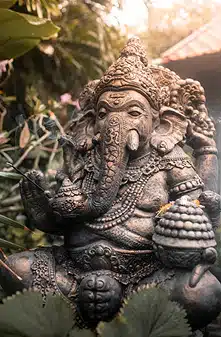
Ganesh’s symbol often includes a rosary of 108 beads, corresponding to the cycle of the precession of the equinoxes. The convex angle of a regular pentagon is 108°.
The Wife reminds us that knowledge of the sacred feminine (creation, cycles) passes through recovered memory and through the “garden of perfumes.”
Olfaction: A Gateway to the Unconscious
Physiologically, the human olfactory mucosa contains about five million olfactory neurons. These transform the chemical message of odorant substances into a neural message understandable by the brain.
The odor must cross the waters (the mucus) to reach the brain. This process has two aspects:
- Remarkable: it awakens memory and allows a spiritual rebirth of the self.
- Dangerous: it can lead into altered states of consciousness.
In Antiquity, the use of plants such as Nard (Valeriana) made it possible to reach states of ecstasy, described in biblical texts and other traditions. The quest for knowledge and for the sacred feminine is demanding, both spiritually and physically. A special preparation, the Iksir (or Elixir), was used to cross the threshold of the mind, granting access to a symbolic world and to a profound truth. The initiates of this path were called “the living ones,” guiding the ordering of the divine world in interaction with the earthly plane.
Neuroscience and Brain Waves
The olfactory bulb, located beneath the cerebral hemispheres, is the entry point for olfactory information. It has three roots connecting it to different areas of the brain (hippocampus, corpus callosum, perforated space). The olfactory nerve is considered the first nerve of the brain.
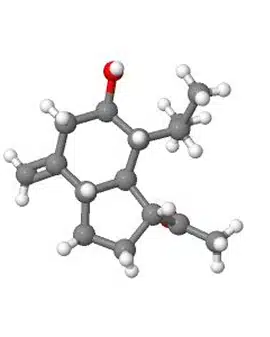
Sesquiterpenes
Plants rich in sesquiterpenes (such as Valerian or Frankincense) act on neurotransmitters and influence brain waves, promoting the transition from the waking state (Beta) to states of deep relaxation and meditation.
The Five Main Brain Waves
- Beta: concentration, alertness, logical thinking.
– Positive: productivity, reasoning.
– Excess: stress, anxiety, insomnia. - Alpha: calm relaxation, presence, transition between action and rest.
– Positive: mental clarity, calm creativity.
– Deficit: difficulty relaxing. - Theta: daydreaming, imagination, deep meditation.
– Positive: intuition, visualization.
– Excess: distraction, cognitive slowness. - Delta: deep sleep, physical and mental regeneration.
– Positive: recovery, immunity.
– Excess when awake: chronic fatigue, depression. - Gamma: high‑level processing, integrated consciousness.
– Positive: advanced cognition, extreme focus.
– Excess: mental overload, migraines.
Sesquiterpenes help modulate these transitions, supporting Alpha and Theta states, essential for meditation and access to deep memory.

Case Study: Valerian and Sesquiterpenes
Sesquiterpenes are aromatic compounds produced by many plants and fungi. They possess major pharmacological properties (anti‑inflammatory, antioxidant, antimicrobial).
Valeriana officinalis, found in the humid meadows of Europe and Asia, is rich in these compounds.
Its composition includes:
- Sesquiterpenic acids (valerenic acid): calming effects
- Valepotriates: responsible for the characteristic odor
- Essential oil: containing monoterpenes and volatile sesquiterpenes
Its name derives from the Latin valere (“to be strong”), but its true power lies in its ability to soothe and guide toward restorative sleep. In India, Valerian (Jatamansi, “embodied spirit”) is a sacred plant used in Ayurveda to develop consciousness and strengthen the mind.
Sources of Sesquiterpenes in Aromatherapy and Phytotherapy
- Valerian — Soothing
- Nard (Jatamansi) — Consciousness
- Frankincense (Olibanum) — Meditation
- Myrrh — Grounding
- Patchouli — Stability
- Vetiver — Grounding
- Ylang‑Ylang — Emotional balance
- German Chamomile — Relaxation
- Italian Helichrysum — Memory, emotion
Isha in Geometry and on the Sphere
The convex angle of a regular pentagon is 108°. Decoding the symbolism of 540° (3 × 180°) through spherical geometry, the diameter, and the act of reversal:
1. The Spherical Dimension
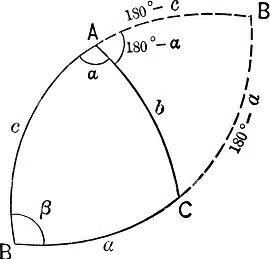
In spherical geometry, the sum of the angles of a triangle is always greater than 180°. A triangle with three right angles (90°) totals 270°. A sum of 540° evokes extreme curvature.
However, if we consider that 540° = 3 × 180°, this evokes the number 3 (trinity, structure) multiplied by the half‑turn (180°).
2. The Symbol of the Diameter and Reversal (180°)
The angle of 180° represents a straight line, or a half‑turn. On a sphere, traveling half a circle (180°) takes us from the North Pole to the South Pole, or from one point to its antipode.
Reversal is the act of passing from one state to its opposite (as in metaphysics: matter/spirit, conscious/unconscious).
Adding three of these half‑turns (3 × 180° = 540°) symbolizes three successive stages of transformation or reversal, allowing one to “circle” the sphere and return to oneself — transformed.
3. Link Between the Nose and Knowledge
The nose is the point of connection between the outside (air, perfumes) and the inside (brain, memory). On a sphere (the head, the universe), the nose is located on the “median line,” the vertical axis.
The idea of 540° could represent the complete journey of consciousness:
- 180°: sensory perception — the nose captures the odor.
- 180°: mental interpretation — the brain analyzes.
- 180°: illumination or return to the source — spiritual knowledge.
The Star Pentagon
In a star‑shaped pentagon (five‑pointed star), the “hollow” (concave) angles inside the shape, at the inward‑pointing tips, are:
- 36° for the acute angles,
- 144° for the obtuse angles at the bases of the star,
depending on the angle considered.