
Why Natural Raw Materials Change a Perfume ?
Since the earliest civilizations, perfume has not been just a smell.
It is an invisible language, a bridge between humans, nature, and what lies beyond.
In certain ancient traditions, especially in India, perfumes were seen as spiritual vectors, capable of connecting the human body to the cycles of the cosmos.
Natural raw materials change a perfume because they are alive and complex.
A natural raw material is an aromatic substance taken directly from a plant and containing a complete set of odor molecules.
Whole botanical essences, flowers, leaves, roots, woods, resins are molecular ecosystems.
They are neither fractionated, nor isolated, nor reconstructed. They carry the integrity of the plant.
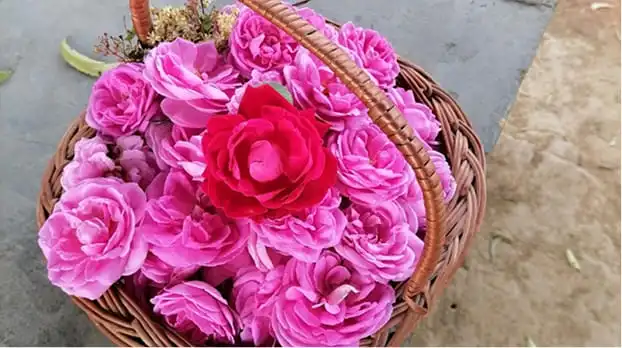
Rose from Kannauj, India
For example:
• An essential oil of rose or jasmine contains around 350 molecules (according to common chromatographic analyses).
• Conventional perfumery works with about 4,000 raw materials, including around 3,000 synthetic and around 1,000 natural.
• Natural perfumery has about 1,000 natural raw materials available, but artisanal houses actually use 300 to 600 depending on their philosophy and regulatory constraints.
Natural vs. Synthetic:
• Natural complex, living, evolving blend; multiple molecular interactions; none fixed scent.
• Synthetic single, stable, isolated molecule; fixed odor; linear evolution.
Direct consequence: a botanical perfume breathes, unfolds, transforms. It doesn’t just smell good it lives. A natural perfume evolves on the skin, creating a richer and more unique olfactory experience.
Natural materials change a perfume because they carry the signature of the living world.
The olfactory signature is the set of scent characteristics specific to a raw material.
This signature depends on natural factors that cannot be standardized:
- its terroir (soil, altitude, exposure)
- the years climate (rainfall, sunlight)
- the extraction method (distillation, CO2, absolute)
- the time of harvest
- the botanical variety
Comparison: one plant, several scents
- A jasmine grandiflorum from Grasse will not smell the same as a jasmine grandiflorum from India.
- A jasmine absolute will not have the same composition as a jasmine essential oil.
- A Damask rose from Bulgaria differs from a Damask rose from Turkey.
Direct consequence: each botanical essence is an encounter, not a formula.
Natural materials change a perfume because they belong to a millennial old tradition.
Botanical perfumery is the art of using plant materials to create perfumes in continuity with ancestral practices.
Before distillation existed, civilizations used:
• plant macerations
• perfumed oils
• sacred resins
In Egypt, perfume was a bridge between earth and sky a sensitive language.
Contemporary botanical perfumery intuitively reconnects with this vision.
Direct consequence: a botanical perfume is not just a smell it is a relationship.
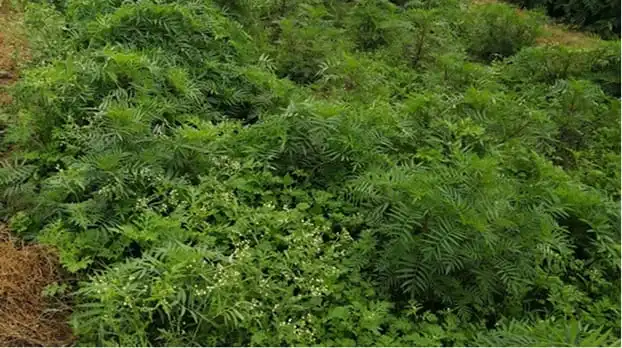
Jasmine plantation, Kannauj, India
Natural materials change a perfume because they interact with our emotional brain.
The limbic system is the part of the brain involved in emotions, memories, and certain behaviors.
Smell is directly connected to it through the olfactory epithelium, composed of sensory neurons.
Natural odors like those of a forest, a river, or damp soil activate this system authentically.
Data
• Forest bathing (shinrin-yoku) reduces stress by 12 to 15% on average according to Japanese studies (Qing Li, Nippon Medical School).
• Volatile molecules emitted by trees (phytoncides) increase NK cell activity by 50% after two days of exposure.
(NK cells, Natural Killer cells, are lymphocytes of the innate immune system capable of rapidly destroying infected or abnormal cells without prior learning.)
Natural vs. Artificial scent
• Natural intuitively recognized by the brain; coherent with the human biological environment.
• Synthetic partial reproduction; more linear stimulation; less deep emotional anchoring.
Direct consequence: smelling the natural world means smelling truthfully.
Natural materials change a perfume because they directly influence its cost.
The material cost is the portion of a perfumes price corresponding to the ingredients used.
Noble materials rose, jasmine, vanilla are rare and expensive.
In conventional perfumery, they are often present in tiny amounts, used mainly as marketing arguments.
International market data
• 1 kg of Damask rose absolute: 8,000 to‚ 12,000 €
• 1 kg of jasmine grandiflorum absolute: 5,000 to 7,000 €
• 1 kg of Bourbon vanilla: 400 to 600€
In botanical perfumery, the real concentration and quality of the materials justify the final price.
The wearer knows what they are putting on their skin.
Direct consequence: a botanical perfume costs more because it truly contains what it claims.
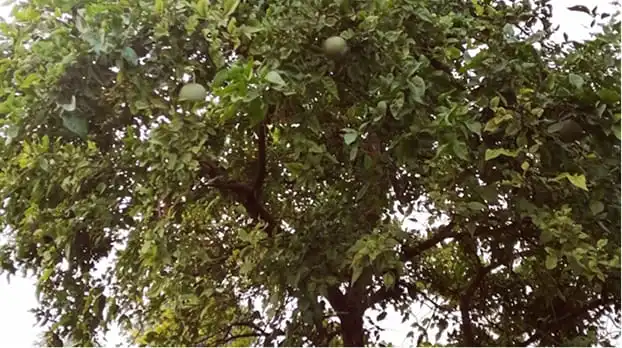
Mango tree, India
Conclusion: a living, conscious, deeply human perfumery
Botanical perfumery is a living, conscious, and deeply human form of perfumery.
It respects the plant, honors the material, and offers an authentic relationship between perfume, body, and soul.
FAQ
What is a natural raw material in perfumery?
A natural raw material is an aromatic substance obtained directly from a plant and containing a complete set of odorant molecules.
Why are natural materials more complex than synthetic ones?
Because they contain hundreds of molecules, whereas a synthetic molecule is single and isolated.
Why can two jasmines smell different?
The terroir, climate, botanical variety, and extraction method all influence the olfactory signature.
Are natural materials better for well‑being?
They activate the limbic system in an authentic way, which promotes relaxation and emotional connection.
Why is a botanical perfume more expensive?
Because it truly contains noble materials, whose price per kilo can reach several thousand euros.